

Vulnerability Scanning
Penetration Testing
Cybersecurity
What we do
At Securitylocus, our security services are designed to be practical, risk-driven, and business-aligned. We help organisations move from fragmented security activities to coherent security capabilities that protect critical operations, support regulatory compliance, and enable confident business growth.
Our approach builds on proven consulting foundations, but goes further by integrating strategy, governance, technology, and operational resilience into a single, repeatable security model.


Security Problems We Address
Modern organisations rely on interconnected IT and OT systems to operate, compete, and deliver critical services. These systems must continuously move, store, and expose valuable data and functionality which makes them attractive and persistent targets for cyber threats.
Security problems rarely stem from a single weakness. In practice, they emerge from limited visibility, accumulated technical debt, complex architectures, and unclear ownership across IT, OT, and supplier ecosystems. When exploited, the consequences are not only technical, but operational, financial, and reputational.
At Securitylocus, we focus on reducing real-world cyber risk by addressing the root security problems that impact operations and decision-making:
-
 Advanced Vulnerability Scanning
Identifying exploitable weaknesses across IT and OT environments, prioritised by business and operational impact rather than raw severity scores.
-
 Asset Discovery & Visibility
Establishing an accurate, continuously maintained understanding of systems, devices, software, and data flows — eliminating blind spots.
-
 OT & IT Security Solutions
Securing interconnected operational and enterprise systems with approaches that respect uptime, safety, and production realities.
-
 Complex Cybersecurity Project Execution
Delivering large, multi-stakeholder security initiatives where architecture, operations, and governance must evolve together.
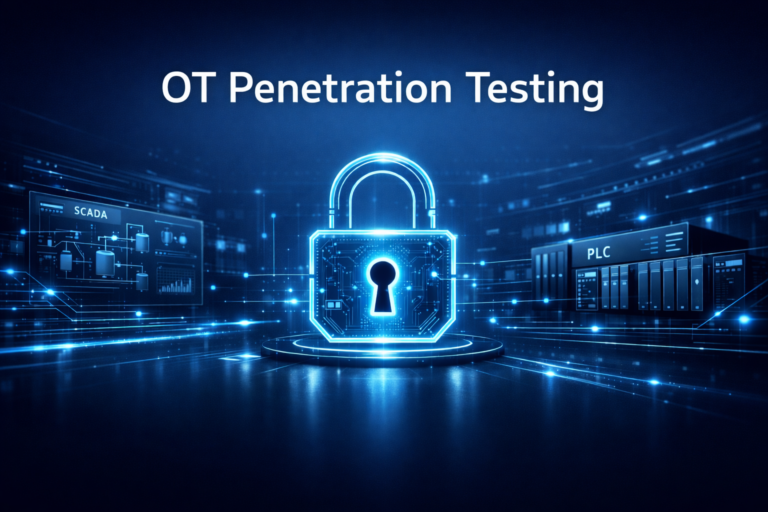
OT Penetration Testing
(External & Internal)
Industrial environments increasingly rely on connected OT systems to maintain safety, availability, and production efficiency. As connectivity expands, so does exposure to cyber threats capable of disrupting physical processes and critical operations. OT penetration testing validates real-world security by safely simulating attacker behavior against operational assets — without compromising uptime or safety.
At Securityfocus, our OT penetration testing services are designed to reduce operational risk by identifying exploitable pathways that could impact production, safety, or regulatory compliance.
External OT Penetration Testing
Evaluates how exposed OT assets can be accessed from outside the organization.
- Identification of internet-facing OT systems, remote access gateways, and vendor access paths
- Testing of perimeter defenses, VPNs, firewalls, and remote maintenance channels
- Simulation of advanced attacker techniques targeting ICS/SCADA environments
- Validation of segmentation between IT, OT, and third-party networks
Internal OT Penetration Testing
Assesses the impact of a breach originating from inside the network.
- Lateral movement testing between IT and OT networks
- Abuse of protocol weaknesses (e.g., Modbus, DNP3, OPC, proprietary protocols)
- Identification of weak authentication, legacy systems, and insecure configurations
- Evaluation of privilege escalation and unsafe trust relationships
IT Penetration Testing
(External & Internal)
Enterprise IT environments support critical business processes and protect sensitive data, making them a primary target for cyber attackers. Traditional vulnerability scans alone cannot reveal how weaknesses can be chained together to achieve real compromise. IT penetration testing goes beyond automated findings to validate true attack paths.
At Securityfocus, we focus on exploitable risk, prioritizing findings that would have real operational, financial, or reputational impact.
External IT Penetration Testing
Simulates threats originating from the public internet.
- Testing of web applications, APIs, and externally exposed services
- Identification of misconfigurations, outdated systems, and weak authentication
- Assessment of phishing-resistant controls and boundary defenses
- Validation of detection and response capabilities
Internal IT Penetration Testing
Models the impact of a compromised internal user, device, or trusted third party.
- Privilege escalation and credential abuse testing
- Lateral movement across servers, endpoints, and cloud environments
- Active Directory security assessment and attack path analysis
- Evaluation of data access, exfiltration, and business-critical systems

Cybersecurity Strategy
Cybersecurity Strategy defines how the organization systematically protects critical assets and services while aligning security efforts with business priorities and risk appetite.
Purpose
Define a long-term, business-aligned direction for how cybersecurity protects critical services, supports organizational objectives, and manages cyber risk.
Business and risk alignment
- Align cybersecurity objectives with business strategy, critical services, and societal responsibilities
- Define risk appetite and tolerance for cyber risks across IT and OT environments
- Ensure cybersecurity investments are prioritized based on business impact, not purely technical risk
Strategic security domains
- Asset visibility and attack-surface management (IT, OT, IoT)
- Vulnerability and exposure management
- Incident response and resilience
- Third-party and supply-chain security
Governance and ownership
- Clear accountability at executive and board level
- Defined roles such as CISO, risk owners, and control owners
- Regular management and board reporting on cybersecurity posture
Roadmap and maturity development
- Defined cybersecurity maturity targets
- Multi-year roadmap with prioritized initiatives
- Continuous improvement driven by risk assessments and incidents
Cybersecurity GRC
(Governance, Risk, Compliance)
Cybersecurity GRC provides the governance framework that enables leadership to understand, prioritize, and govern cyber risks in a controlled and transparent manner.
Purpose
Provide structured leadership oversight, decision-making, and accountability for cybersecurity across the organization.

Governance structure and leadership oversight
- Clear governance bodies (e.g. board, risk committee, security steering group)
- Defined roles such as CISO, Risk Owners, and Control Owners
- Regular management and board reporting on cybersecurity posture
Integrated risk management
- Centralized identification, assessment, and prioritization of cyber risks
- Consistent use of risk appetite and risk tolerance
- Alignment of cybersecurity risks with enterprise risk management (ERM)
Policy, control, and assurance integration
- Alignment of policies, controls, and operational activities
- Clear linkage between:Strategy, Risk assessments, Controls, Tasks and remediation
- Independent assurance and internal audit involvement where applicable
Transparency and decision support
- Tracking of remediation actions and ownership
- Measurement of maturity and effectiveness over time
- Use of lessons learned from incidents and audits to improve governance
Continuous improvement and accountability
- Dashboards and reports tailored to: Executives and board members, Security and IT/OT teams
- Clear visibility of risk levels, trends, and outstanding actions

Compliance
Cybersecurity compliance ensures that regulatory obligations are met through documented, risk-based, and defensible security practices.
Purpose
Ensure that cybersecurity practices meet regulatory, legal, and contractual requirements and can be demonstrated to authorities and auditors.
Identification of applicable requirements
- Mapping of relevant regulations and standards (e.g. NIS2, ISO 27001, IEC 62443, GDPR)
- Understanding sector-specific and national obligations
- Identification of management accountability requirements
Policy and control framework
- Documented cybersecurity policies, procedures, and standards
- Alignment between policies, controls, and practices
- Clear ownership of compliance obligations
Risk-based and proportional compliance
- Compliance driven by risk assessments, not checkbox controls
- Proportional security measures aligned with organizational size, role, and criticality
- Justification of chosen controls and approaches
Evidence, documentation, and audit readiness
- Traceable documentation of: Risks, Controls, Actions taken, Validation of effectiveness
- Standardized reports and repositories
- Ability to demonstrate compliance over time, not only at audit points
Continuous compliance monitoring
- Ongoing monitoring of control effectiveness
- Regular reviews and updates as regulations and threats evolve
- Integration of compliance with daily cybersecurity operations
Cybersecurity Risk Assessment
Cybersecurity Risk Assessment enables informed decision-making by systematically identifying, prioritizing, and managing cyber risks based on business impact.
Purpose
Provide a structured and documented foundation for identifying, prioritizing, and treating cyber risks across IT and OT environments.

Context and scope definition
- Identification of business-critical processes and services
- Definition of scope across IT, OT, and IoT
- Inclusion of regulatory and sector-specific requirements
Asset and dependency identification
- Comprehensive inventory of hardware, software, firmware
- Mapping of dependencies between IT and OT systems
- Classification of assets based on criticality
Threat and vulnerability identification
- Identification of relevant threat scenarios (e.g. ransomware, insider threats, nation-state actors)
- Use of vulnerability scanning and technical assessments
- Focus on actual exposure such as internet-facing systems and remote access
Risk treatment and follow-up
- Selection of risk treatment strategies (mitigate, transfer, avoid, accept)
- Documentation of controls and remediation actions
- Continuous reassessment and updates as environments and threats change
Risk analysis and prioritization
- Assessment of likelihood and impact
- Consideration of operational, safety, financial, reputational, and regulatory consequences
- Use of risk matrices and heatmaps for management visibility

Contingency Plans
Contingency plans ensure that the organization can respond effectively to cyber incidents, protect critical services, and restore operations with minimal impact.
Purpose
Ensure that the organization can maintain or rapidly restore critical operations during and after a cybersecurity incident.
Establish clear incident and crisis scenarios
- Define realistic cyber scenarios (e.g. ransomware, OT disruption, loss of critical systems)
- Consider both IT and OT impacts, including safety and service continuity
- Align scenarios with business-critical services and societal obligations
Define roles, responsibilities, and escalation
- Clear assignment of responsibilities (technical response, management, communications)
- Defined escalation paths to executive management and authorities
- Integration with emergency and crisis management structures
Testing and exercising contingency plans
- Regular tabletop exercises and simulations
- Lessons learned and continuous improvement
- Documentation of test results and improvements
Communication and coordination
- Predefined internal and external communication plans
- Procedures for communication with regulators, customers, partners, and the public
- Controlled information flow to avoid misinformation during incidents
Business continuity and disaster recovery planning
- Identification of critical systems and recovery priorities
- Defined Recovery Time Objectives (RTO) and Recovery Point Objectives (RPO)
- Secure, offline, and regularly tested backups
Cybersecurity Awareness Training
Cybersecurity Awareness Training reduces human-related cyber risk by embedding secure behavior through continuous, role-based education and measurable outcomes.
Purpose
Create sustained secure behavior across the organization by ensuring employees understand cyber risks and their role in reducing them.

Role-based training
- Tailored training for: Executives and board members, IT and OT personnel, Business and administrative staff
- Focus on role-specific risks and realistic scenarios
Measurement and improvement
- Metrics such as phishing click rates and reporting quality
- Use of results to improve training effectiveness
- Integration of awareness metrics into management reporting
Continuous training model
- Ongoing awareness campaigns rather than one-off courses
- Micro-learning formats (short videos, emails, exercises)
- Regular updates reflecting changes in the threat landscape
Practical exercises
- Phishing and social-engineering simulations
- Focus on learning and improvement rather than punishment
- Reinforcement of correct reporting behavior
Baseline awareness for all employees
- Understanding common threats such as phishing, ransomware, and social engineering
- Awareness of personal responsibility for information and operational security
- Clear guidance on how to recognize and report incidents